Wednesday, December 9, 2015

Artifact Spotlight: Libanon Nuta


This is the title page of the religious pamphlet “Libanon Nuta” by Rabbi Natan Landau, which is part of the AJC’s collection. It was published in 1901 in Podgórze, near Kraków, and details the subject of ritual purity. Natan Landau, whose family was part of the local rabbinic dynasty, was president of the rabbinic court in Oświęcim. The stamp of Rabbi Leser Landau (1869-1938), his son, appears on the page. Leser held the prestigious post of Deputy Chief Rabbi of Oświęcim for 21 years. The artifact was obtained from the Oświęcim branch of the State Archive in Katowice. Learn more about the Libanon Nuta here.

Volunteer Profile: Paul Martin Sautner, 2015

Hometown: Vienna, Austria

What attracted you to the AJC? A few years ago, I developed an interest in Middle Eastern cultures and languages. I became fascinated by the thousands of years of traditions, rituals, and the rich cultural history. When I learned about the AJC, I was drawn to the opportunity to teach and learn about Judaism and Jewish culture, not only the Shoah. The AJC offered me the opportunity I was looking for.

What are you enjoying most about your volunteer experience? I learn the most interesting things from questions from groups I guide that I don’t know the answer to. I also really enjoy visits from Israeli groups: last week, for example, we had a group of young Israelis. One of them told us that one of his ancestors lived in Oświęcim and showed us his great-grandfather in one of the pictures at the AJC.

How has volunteering affected you? 
I certainly have become more reliable and responsible here. Also, I feel more confident and comfortable speaking in front of groups. I have learned to express my thoughts more clearly and efficiently. Working here, I am learning about Judaism and Polish culture in an engaging, less abstract manner.

What is one thing you'd like others to know about the AJC or think people don't know? When I was still in Austria, preparing to come to Poland, I told people that I was going to Oświęcim to work there for a year. I did not meet a single person who knew what Oświęcim was, and when I clarified, people assumed it would be a depressing experience. Life in Oświęcim, however, is not depressing at all. It is a beautiful, dynamic town. People must know that the focus of the AJC is not on death and destruction, but rather on life.

Alumni Profile: Captain Stefanie Culp, 2008 ASAP

What inspired you to apply to the American Service Academies Program?
I first visited the U.S. Holocaust Memorial Museum in Washington, D.C. in middle school and was surprised, more accurately stunned, by the experience. I remember being amazed that children just like me had endured such a horrific experience. Even at that age and with limited knowledge of the Holocaust, it was apparent to me that one could not gain a comprehensive understanding of its events by studying a textbook or taking a class. When the opportunity arose to apply for the American Service Academies Program, I applied for the breadth of educational and interpersonal experiences it promised.

What surprised you most about the experience? Although I applied to the program for the experience, I underestimated the breadth of the experience in its entirety. I expected considerable academic requirements and the whirlwind tour of D.C., New York City, and Poland. I was not prepared for the rush of emotions brought forth by these experiences, including meetings with individuals profoundly impacted by the Holocaust. I will never forget the scope of reactions displayed by my fellow ASAP participants while visiting Auschwitz and Auschwitz-Birkenau: there was disbelief, shock, fear, anger, and deep sadness. It was amazing that a group of individuals with similar training, values, ethics, and career choices could be affected so differently. It led me to understand that we could not only display varying emotions, but also respond in vastly different ways to the same stimulus. It was a foundational experience that impacted my understanding of the importance of instilling core values, particularly integrity, in all military members.

How did the ASAP impact you after you completed the program? Based upon my newfound respect for the core value of integrity, I began to look at my commitment to military service a bit differently. I had sworn to protect my country at any cost, to include making the ultimate sacrifice. What I had not fully considered was that it could and should mean disobeying orders that are detrimental to the values and rights upon which our nation is founded. I no longer identified with the young children who endured this horrific event, but the young officers who were tasked with carrying out such horrific actions. I realized I must continue to develop my personal integrity to prepare for taking a stand for what is right and for enabling Airmen around me to do the same. My experiences in the ASAP are an always-present reminder that military members and society at large must always strive and sacrifice for what is right.

Stefanie Culp graduated from the United States Air Force Academy in 2009. She attended pilot training in Columbus, Mississippi and then was stationed at Joint Base Lewis-McChord flying the C-17 from 2011-2014. Stefanie is currently stationed at Joint Base McGuire Dix-Lakehurst, NJ where she is a C-17 Instructor Pilot and an Operations Group Executive Officer. She lives in Philadelphia, close to her hometown of Chestertown, Maryland.

New Łódź Jewish Cemetery

Todd Hennessy, 2015 AJC Faculty Fellow

The New Łódź Jewish Cemetery, established in 1892, is the largest Jewish Cemetery in Europe. More than 180,000 graves and 65,000 tombstones, ohels (structures built over graves), and mausoleums occupy the cemetery located on Zmienna Street, south of the Radogoszcz train station.

During the Nazi occupation, the cemetery became part of the eastern section of the enclosed ghetto. Between 1940 and 1944, approximately 43,000 burials took place in a part of the cemetery that became known as the “Pole Gettowe" or Ghetto Field. The cemetery was also the site of many mass executions of Jews, Roma, and non-Jewish Poles.

Upon entering the Beit Tahara (funeral home) within the cemetery, I was instantly met with a sense of warmth; not temperature, but comfort. The angles, colors, symbols, textures of this humble room illustrate its importance in the preparation for a Jewish burial. There was also a silence to the room that conveyed its purity, its strength.

After a few moments I began to realize just how many victims of the Holocaust that were not granted this ritual carried out with dignity and respect. The traditional washing (rechitzah), ritual purification (taharah), and dressing (halbashah) of the deceased, the prayers and readings from Torah, The Law of Onen, and the practice of Shemira, all of which were lost.

We all too often focus on the total number of victims of the Holocaust and the manner in which they were murdered. What is sometimes lost, though, is the focus on the manner in which these victims lived; from birth to burial within a culture of beliefs, customs, and traditions.

Todd Hennessy is an educator with The Colorado Holocaust Educators in Denver, CO. For fifteen years Todd taught middle and high school social studies for two public school districts in Colorado. He currently teaches the Holocaust curriculum for the Temple Sinai Religious School in Denver, and is a United States Holocaust Memorial Museum Regional Education Corps Member and Museum Teacher Fellow. When Todd is not teaching, he is a career firefighter / EMT with the South Metro Rescue Authority in Centennial, CO.

Thursday, August 6, 2015

Artifact Spotlight: Dictionary


This handwritten Polish-Hebrew dictionary belonged to Ester Posner, who most likely was a member of a Zionist youth group during the interwar period. One of the aims of the Zionist movement was to promote the use of Modern Hebrew among Jews. The dictionary was found in a house near the Market Square in Oświęcim and donated by Mirosław Iżyczek. Click here to learn more about Jewish history of Oświęcim during the interwar period.

Volunteer Profile: Stefan Hemerka, 2015

Hometown: Vienna

What attracted you to the AJC?
I found it extremely interesting that not many people know there is a town next to Auschwitz. I barely knew the region and I wanted to learn about the history. As an Austrian, I found that this aspect of European history was not taught to us enough, especially that Jews were a major part of Polish culture.

What are you enjoying most about your volunteer experience?
The word “fun” may not be used often with such a volunteer work, but the different groups that come are engaging and make the experience meaningful. The most valuable part of the experience is our teamwork; teamwork will always make the experience more fun and worthwhile. The best part is the work that I am doing: leading tours, meeting new people, and learning everyday.

How has volunteering affected you?
Working at the AJC has helped me mature personally and professionally. I’ve learned to adapt to changes and people. I feel more responsible and know how to face challenges more efficiently than I had before this experience.

What is one thing you'd like others to know about the AJC or think people don't know?
First, I always want people to know that even though the name is the Auschwitz Jewish Center, the center is not in Auschwitz, but in Oświęcim. Even though it is a small place, we have a lot to offer like a functioning synagogue, an exhibition with a rich history about Jews in the town, an educational center, and of course, Café Bergson, which has become an important meeting place for the community.

Alumni Profile: Captain David G. Krueger, 2007 ASAP

What inspired you to apply to the American Services Academies Program?
My interest in the American Service Academies Program started during my junior year at West Point, when I began preparing for my upcoming thesis on the Armenian Genocide. My thesis advisor, Dr. David Frey, emphasized nationalism and ethnicity as concepts fundamental to understanding the genocides of the twentieth-century, with the Holocaust as one of the most powerful case studies. He encouraged me to compete for the program to devote my time and efforts exclusively to the topic and gain depth and perspective. It also provided the opportunity to work alongside students from other Services and countries while traveling abroad, outside the routine of the Academy.

How did the ASAP impact you after you completed the program?
The program had immediate impacts on my development as a cadet, but I continue to see its influence in my growth as an officer to this day. Moral maturity can’t be achieved in a summer, but the perspective gained there provided powerful context for defining my own core values. I expect any graduate of the program would agree that they are now much more vigilant and intolerant of behaviors and systems that drive individuals and organizations towards discrimination. It also encouraged a more global sense of responsibility, to stay invested in events that may not have an immediate or obvious impact on me personally or on the United States.

What surprised you most about the experience?
One of the most surprising and enriching parts of the experience was the depth of cultural context it provided. The Museum of Jewish Heritage and the Auschwitz Jewish Center thoroughly address the tragedy of the Holocaust, but emphasize the preservation and understanding of Jewish history and culture as a central tenet of their mission. Atrocities and discrimination are dishearteningly common and inseparable themes of history, but using them to define a group denies them agency and distracts from their contributions to society.

What is your fondest memory of the ASAP?
Whenever anyone asks me the most enjoyable part my trip, I don’t hesitate to say Kraków. The city is beautiful, historic, and modern. There is no shortage of culture or entertainment and I encourage anyone who has limited time in Europe to devote some of it to Kraków.

Captain David G. Krueger participated in the American Service Academies Program in 2007 and graduated from the United States Military Academy at West Point in 2008. He is currently stationed at Fort Eustis, VA with his wife Christine, who is also a Captain in the Army. His next assignment is to begin graduate school this fall, studying History at Harvard University, followed by an assignment to teach Military History at West Point in 2017.

Bobowa's Jews


Waitman Wade Beorn, 2008 AJC Fellow

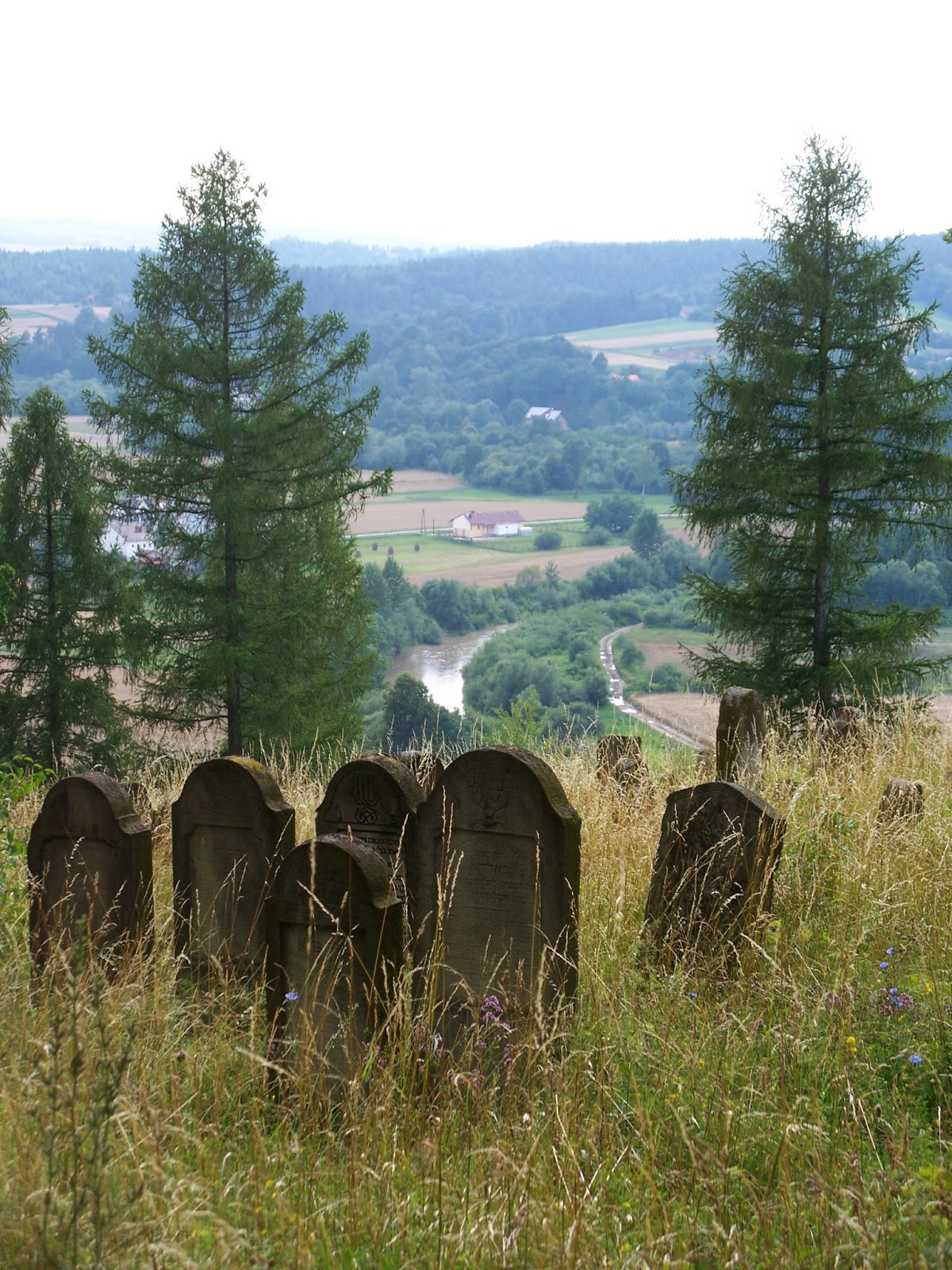
In 1939, the town of Bobowa had a population of approximately 700. During the Holocaust, it served as a concentration point for Jews from smaller villages in the surrounding countryside, including 60 Jews from Oświęcim. During the course of the war, many Jews were sent to work in labor camps in the area. The ghetto was liquidated on August 14, 1942, and the remaining Jewish inhabitants of Bobowa were murdered in a nearby forest. I took this photograph at the Jewish cemetery overlooking the town. There was something unsettling about the combination of the picturesque location, the intact gravestones, and the overgrown condition of the cemetery. Like those of many Jewish sites in Poland, this photograph evokes both the sense of loss of Jewish life and culture due to the Holocaust and physical reminders of the communities that remain.

Dr. Waitman Wade Beorn is the Director of the Virginia Holocaust Museum in Richmond, VA. He received his PhD in History from the University of North Carolina- Chapel Hill in 2011 and is a 2000 graduate of the United States Military Academy at West Point. He is the recipient of numerous fellowships and scholarships, and has published several books. Recently he was honored with the Thomas J. Wilson Memorial Prize for best first book from Harvard Press. He is currently preparing a major project on the Janowska concentration camp outside of Lviv, Ukraine.

Moved by Wooden Synagogues

Evan Alberhasky, 2014 AJC Fellow
The old adage “a picture is worth a thousand words” aptly conveys how I felt upon viewing the replica of the Gwoździec Synagogue, which now stands as a centerpiece of the Museum of the History of Polish Jews in Warsaw.

Wooden synagogue construction was common during the sixteenth to eighteenth-century Polish-Lithuanian Commonwealth, which today is part of Poland, Lithuania, and Ukraine. European Jews were afforded peace and prosperity, a chance to continue their traditional ways of life. A flourishing trade economy and religious tolerance made the area a haven for Jews fleeing persecution from Western Europe. Due to the abundance, and therefore, inexpensive nature of wood in the area, it was a matter of course that the most significant building in the Jewish community—the synagogue—would be built of wood.

These synagogues—whether in Jedwabne, Gwoździec, or Jurbarkas, Lithuania—were typically constructed with fairly unadorned exteriors concealing the grandeur and religious iconography that lie within. Carvings and magnificent paintings adorned the domes and vaulted ceilings. The decorative manifestations simultaneously reflected both traditional Jewish folk art and the birth of a new unique style that reflected the freedom Jewish craftsmen were given in the area. In the Gwoździec Synagogue, zodiac signs and animal symbols were reflected in fantastic hues of blue and red, similar to those found in recently excavated Galilean temples from late antiquity. The bima stood as the centerpiece of every wooden synagogue: this highly crafted art piece would face the ark where the Torah, the elemental text of Judaism, was stored. Wooden synagogues of the Commonwealth period were a ubiquitous feature of the countryside, then a crossroad between east and west, where modernity was just starting to peek out of the traditional shtetl life.

The extraordinary phenomenon of wooden synagogues represented a high point in artistic Jewish creation, yet Nazis destroyed the vast majority of these impressive wooden structures during the Holocaust. In a sweeping blitz, Nazi forces obliterated architectural wonders. Fortunately, during the interwar period, a group from the Institute of Polish Architecture of the Polytechnic of Warsaw, cognizant of the historical importance and artistic value of wooden synagogue construction, had been commissioned with the task of documenting the then-extensive network of wooden synagogues in the region. While much of their documentation was destroyed during World War II, enough remained intact for Maria and Kazimierz Piechotka to finish the work. In 1957, Wooden Synagogues was published in Polish and two years later, in English. Their book became a testament to the splendor and loss of wooden synagogues.

Fast forward several decades into the new millennium. A renewed interest in wooden synagogue construction took flight thanks to the dedication and efforts of Rick and Laura Brown, founders of non-profit Handshouse Studio, which facilitates hands-on community service projects. In the summer of 2011 and 2012, a workshop was created with the explicit goal of replicating the seventeenth-century Gwoździec Synagogue roof and painted ceiling. Twelve workshops, eight Polish cities, 58 professionals and over 300 students later, the roof was reconstructed and moved into the central wing of POLIN, the Museum of the History of Polish Jews. Chief curator Barbara Kirshenblatt-Gimblett led our group through the exhibition, explaining the museum development and the intricacies of the stunning synagogue.

As you walk into the museum, a façade of modern glass gives way to an undulating wavelike entryway. To the right, the apex of the pointed wooden roof peaks out through the floor, an engineering feat suspended by multiple steel cables, a mixture of metal and wood, past and present. Our tour took place in July 2014 while the exhibition was still under construction before the September 2014 opening, but the roof and bima had already been lowered into their final resting place.

Our journey around Poland had already shown us the various states of synagogues in the country. Preservation and renovation were concepts we often reflected on, examining how they could be uplifting or even detrimental to the surrounding community. Some structures, such as the 1852 Działoszyce synagogue, remain a skeletal shell of the past; the 16th century Remuh Synagogue in Kraków is one of many renovated and used for worship. What we saw in the Gwoździec Synagogue replica was something different: a unique piece of history that not only reflected the glorious past of the 1,000 year presence of Jews in Poland, but also an educational tool connecting the past, present, and future.

To be sure that this historic structure and its relationship to the past would be remembered, a documentary team recorded the entire process of reconstruction, from start to finish—one tree, one saw, one nail, and one paintbrush at a time. The group of students and professionals utilized only the techniques and methods that would have been available during the period in which the original synagogue was constructed. The international premier of Raise the Roof took place at the 2015 Atlanta Jewish Film Festival. I sat in the theater, watching the film slowly develop with snippets of the colorful roof shown here and there; I reflected on how it felt to see the structure as an AJC Fellow in Poland. I felt a small sense of electricity go up my spine each time a new colored piece would come into focus. I was transported back to my fellowship and the time I spent in Poland. I was carried away to a time of my ancestors.

The colors of the Gwoździec Synagogue roof may slowly fade from my mind as time progresses, but this memory will not. The roof and the museum represent a new age, one in which the idea of Poland as a Jewish cemetery no longer holds supremacy. The museum in Warsaw where the roof rests is one more layer on top of a presence that exists as much in the past as it does in the future. A roof has been raised once again—physically, emotionally, existentially. Let us hope that this time around, it will not ever come down.

Originally from southern Kentucky, Evan works for ORT America in Atlanta as the region’s Development Associate. He previously worked at the Jewish Theological Seminary in New York City for four years and has a working knowledge of Hebrew and Russian. Evan holds an M.A. in Jewish Studies from the Hebrew University in Jerusalem, a second M.A. in Holocaust and Genocide Studies from Kean University, and a B.A. in History from Indiana University. Evan and his wife Marina are members of Temple Emanu-El in Dunwoody where they also teach Sunday school.

Jewish Sites in Poland as Transnational Spaces

Nicole Freeman, 2014 AJC Fellow

While visiting Jewish cemeteries and memorials in Poland last summer, I reflected upon the sites I had previously seen in Germany. What are their differences and similarities? How have Germany and Poland comparatively come to terms with their difficult pasts? My own academic research on twentieth-century Germany and Poland has been greatly influenced by the most recent “transnational turn” within the history discipline. Transnational history focuses on the movements of peoples, ideas, goods, and technologies across nations. In fact, historians now look beyond national boundaries to study global themes and processes in a larger context. Transnational history allows for scholars to challenge the traditional framework of the nation state, expose its limitations, and problematize nationalist histories. Historians, like Michael Meng, have recently studied Jewish synagogues and cemeteries as transnational spaces in Germany and Poland.

Meng’s book, Shattered Spaces, focuses on the destruction and preservation of Jewish sites and property after the Holocaust in Germany and Poland. He uses the cities of Berlin, Warsaw, Potsdam, Essen, and Wrocław as case studies in order to show parallel histories and shared memoires across national boundaries. Both Germany and Poland’s approaches to Jewish ruins evolved greatly over a 60-year period. Meng argues that local officials in Germany and Poland “made deliberate choices about what to rebuild and preserve from the rubble of the war.” This conscious selection helped reshape postwar German and Polish national identities. With small or no remaining Jewish populations, Jewish sites represented a past that neither nation wanted to confront in the immediate postwar decades. Thus in the 1950s and 1960s, urban renewal allowed Germans and Poles to build new, modern capitals and “erase these reminders of the past rather than mourn the catastrophe behind their shattered condition.” However, there was a general shift from destruction to preservation in the 1970s and 1980s. National politicians, tourists, and international Jewish leaders brought attention to Jewish ruins and sought to reconstruct the Jewish past.

During the AJC fellowship, we visited many of these preserved and reconstructed spaces of Jewish history in Poland. The Jewish cemetery, Monument to the Ghetto Heroes, and the new Museum of the History of Polish Jews in Warsaw are just a few of the sites in Poland that represent Jewish memory, nostalgia, tension, melancholy, and mourning. Meng refers to these kinds of reconstructed and newly built Jewish sites as spaces of “redemptive cosmopolitanism.” The commemorative sites represented the missing multi-ethnic nature of German and Polish democratic societies.

By comparing these Jewish sites of memory and mourning, we are able to address larger questions regarding the legacy of the Holocaust in contemporary Germany and Poland. Today’s historians are using transnational methodologies in order to bring these two countries into dialogue with each other. Moving away from national narratives allows for historians to draw connections between multiple countries and bring new perspectives to old questions.

Nicole Freeman is a PhD student at the Ohio State University who specializes in twentieth-century German and gender history. In 2012, she graduated summa cum laude from Salem State University with a BA in History and received her Massachusetts Initial Educator License in History and the Social Sciences. Nicole’s honors thesis explored the experiences of Jewish children rescued by the Kindertransport who lived with English foster families during the Second World War. Prior to staring graduate school at Ohio State, she interned at the United States Holocaust Memorial Museum in Washington, D.C.